
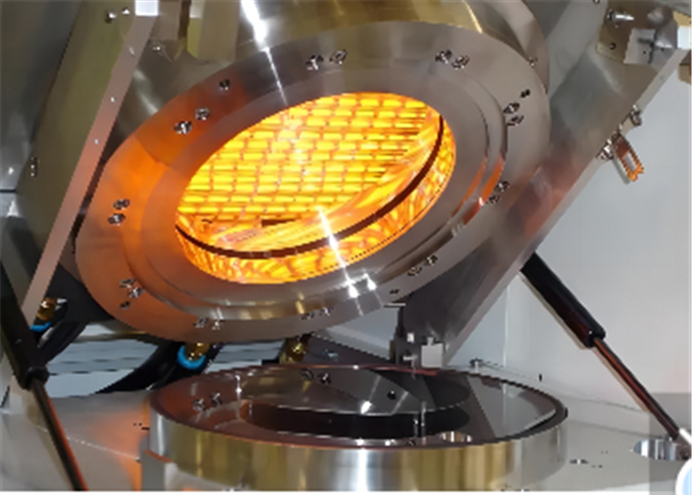
Why we’re switching to Infrared Curing for Wafers
Lately, there’s been a real push toward infrared (IR) curing. It makes sense. Why mess around with nasty chemical solvents or leave a massive carbon footprint when you don’t have to? The way IR works is pretty clever. Instead of heating up a giant oven chamber and wasting energy on the walls and the air, it uses electromagnetic waves to hit the wafer surface directly. It’s targeted. Efficient.
The “Green” side of drying
If you’ve used traditional convection drying, you know the drill: you blast hot air everywhere. It’s a waste. IR is a different beast. It uses short-wave radiation that sinks right into the coating or photoresist. The result? You hit your target temperature way faster. Plus, since you aren’t relying on combustion gases or lead-based catalysts to get the job done, it checks all those “eco-friendly” boxes that global fabs are demanding these days.
The balancing act: Distance and Heat
Here is where it gets tricky. The gap between your IR lamp and the wafer is everything. Get them too close? You’ll end up with hot spots or, worse, a burnt wafer. Put them too far away? Your throughput tanks and you’re losing money. We spend a lot of time calibrating this based on exactly how many watts per square centimeter the process needs. And you have to watch your heat density. Those high-output quartz lamps pack a punch, but they put a serious load on your cooling system. If your chiller can’t handle the heat soak, your electronics will start to drift, and then you’ve got a real headache on your hands.
The reality check
Now, IR is clean, but it isn’t magic. The biggest struggle is uniformity. Since IR travels in a straight line, any little shadow or a lamp that’s slightly out of alignment creates an uneven cure. It’s annoying. To fix this, you need your jigging to be spot on to keep that wafer perfectly flat. I always suggest using a closed-loop PID controller. It keeps things steady and stops the temperature from overshooting right when you’re hitting the final stage.