

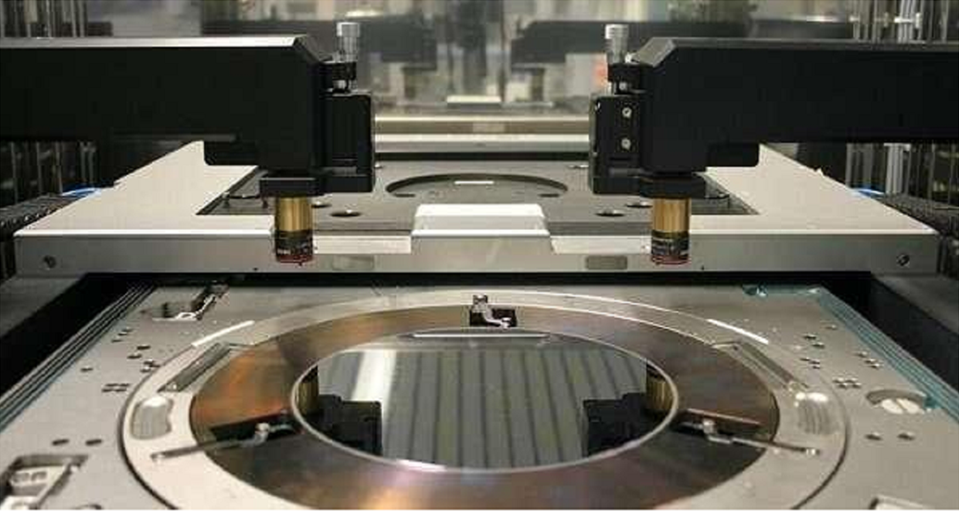
On the lithography floor, a half-degree drift during soft bake is enough to turn a controlled photoresist profile into a thickness excursion. The ellipsometry wafer probe heater was built to stop that drift before it starts. We designed it for the thermal realities of wafer drying, photoresist pre-bake, and post-exposure bake — where temperature uniformity literally writes the device geometry. What matters under the hood You get a short-wave infrared emitter paired with a quartz-stabilized thermal path, holding wafer-level uniformity within ±0.1°C across the probe footprint. Setpoint changes translate immediately, with sub-second response and no overshoot. The system is cleanroom-compatible down to Class 1, using materials and surface finishes that keep particle generation at zero. Output stays stable within 1% over 5,000+ hours, so it can run 24/7 with maintenance intervals you can plan around. Why this matters on the line In day-to-day use, that precision cuts photoresist rework and protects the thermal budget across the stack. Soft bake repeatability tightens thickness control, and that feeds directly into better overlay and critical dimension control downstream. The same stable heat profile carries through hard bake and curing without baking in stress-induced nonuniformity. You also save energy because the emitter heats the target, not the chamber walls, and the process window widens once thermal transients disappear. The details that make it work Installation comes down to matching the probe geometry and the wafer surface emissivity — dielectric stacks and backside metallization can shift the effective setpoint by a few degrees. Plan the mounting interface early, and make sure the controller’s PID tuning is dialed in for your wafer stack. Once it’s aligned, the heater delivers the repeatability you need, shift after shift.