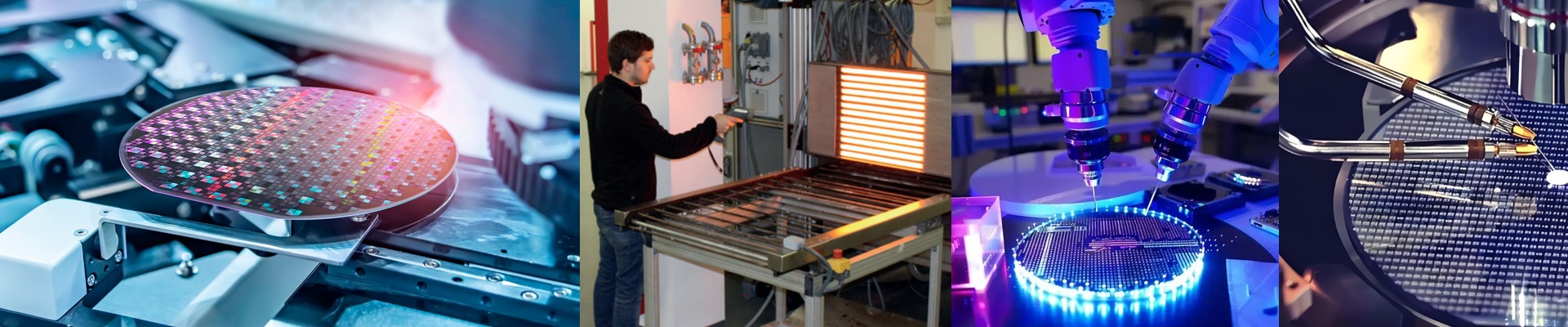
On the lithography floor, you know how quickly things can go sideways. A soft bake or hard bake that drifts even half a degree will move your critical dimensions. And if a lamp takes a dive mid-cycle, the line stops dead. The real cost of an infrared wafer heater lamp isn’t just the sticker price—it’s the unplanned downtime, the scrapped wafers, and the thermal budget you burn just chasing stability. What actually matters under the hood We built these NIR lamps around a short-wave infrared emitter matched to photoresist absorption. That’s how you get a fast, predictable temperature rise on the wafer. We hold thermal uniformity across the wafer to ±0.1°C, and repeatability is baked into lamp geometry, power control, and emissivity stability. The assembly is cleanroom-ready for Class 1–100, with materials and terminations chosen to keep particle generation down. In practice, that means fewer defects and a bake profile you can stand behind when the process window gets tight. Why this holds up on a 7x24 floor You run around the clock, and the process has to close the same way at 02:00 as it does at 08:00. These lamps are built for continuous operation with zero unplanned failures—5,000+ hours with less than 5% output drop. That gives you stable soft bake and hard bake temperatures, consistent CD control, and fewer interruptions for lamp swaps. The cost per hour comes down because you stop paying for variability: less rework, fewer recalibrations, and maintenance that stays predictable. The details that bite you if you skip them NIR lamp performance hinges on matching the heater module, power supply, and optical path. Installation tolerances are tight, and the lamp has to be aligned to the wafer plane to hit the uniformity spec. Plan for proper thermal anchoring, and make sure the interface matches your bake station—mounting or reflector geometry that’s off will show up as hot spots, even when the lamp itself is within spec.