
Stop Waiting on Your Oven: Why IR Curing Beats Hot Air
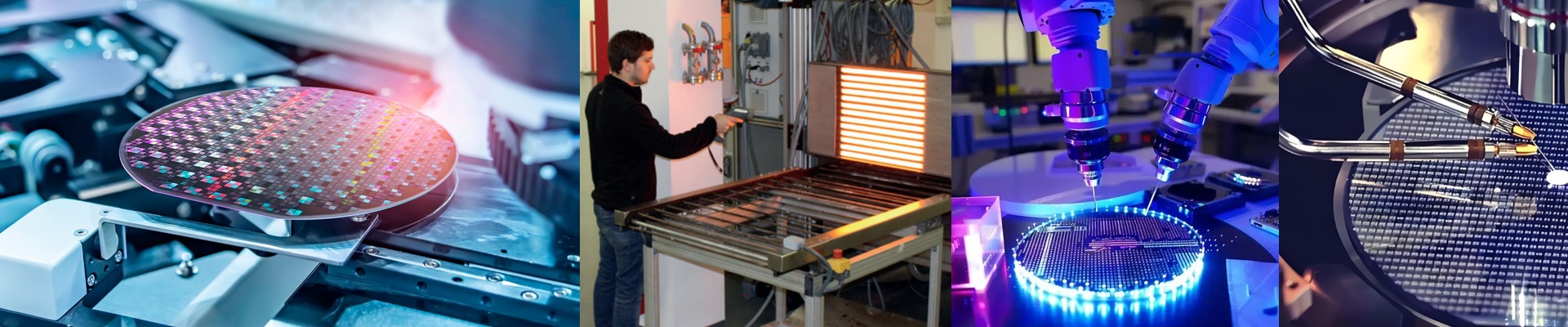
If you’re still relying on hot air circulation for semiconductor processing, you’re basically playing a waiting game. Here’s the deal: hot air is slow. It uses convection, meaning you have to heat up the air, and then the air has to heat up your part. It’s a middleman process. That lag is a silent killer for your throughput. IR lamps just cut out the middleman. They use electromagnetic radiation to shoot energy straight into the substrate. No waiting. No air. Just heat where it actually needs to be. The hidden cost of “warm-up time” Think about those big hot air ovens. You can’t just flip a switch and go; you have to wait for the whole chamber to stabilize. In a high-volume fab, those minutes of idle time are just money leaking out of the building. IR lamps hit their stride in seconds. It changes the whole rhythm of the floor. Instead of waiting for a fan to push heat around, you’re hitting the material with photons. It’s fast. Really fast. Getting surgical with your heat One of the best parts? You can actually pick and choose where the heat goes. With IR, you can set up your lamp array to target specific zones. You aren’t just baking the entire assembly and hoping for the best. This means you stop dealing with that annoying warping or thermal stress that happens when a convection oven has a “cold spot” or an uneven blast of air. The trade-off (because nothing is magic) Now, there is a catch. IR heat is intense. Since the ramp-up is so aggressive, you have to make sure your substrate can actually handle the shock. If your material is a bit fragile, you can’t just blast it at 100%. You’ll need to program a stepped power curve so you don’t end up with cracks. And a quick tip: check your cooling system. Radiant heat bounces. If your sensors aren’t shielded or cooled properly, they’ll fry. Most fabs scaling up have already made the switch. It clears up floor space and turns a curing window that used to take minutes into something that takes seconds.