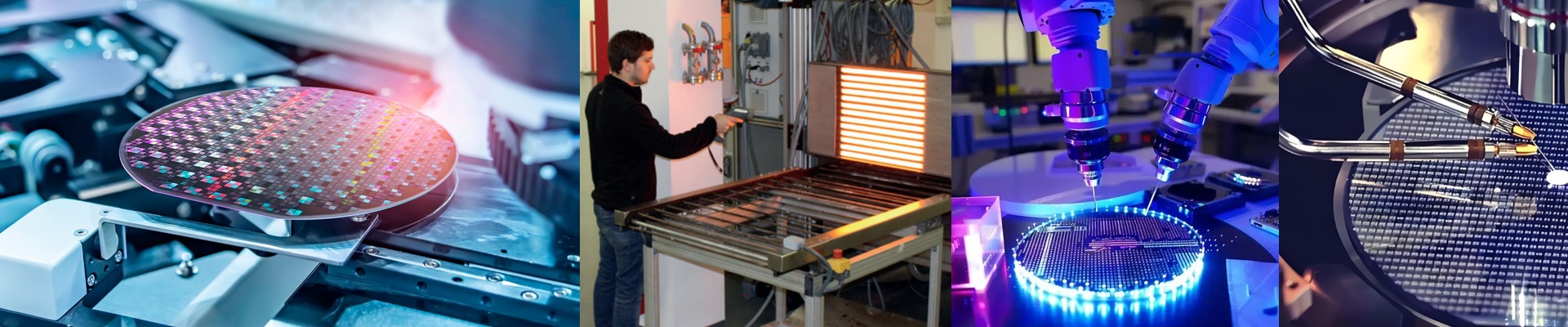
On the fab floor, the die attach station is where the die lands on the substrate and the adhesive does the work of holding it there. One temperature spike across the bond line, one hotspot, and the adhesive can under-cure or over-cure in a heartbeat. Under-cure opens the door to delamination and wire sweep. Over-cure drives out volatiles, invites voiding, and throws off the thermal budget for encapsulation downstream. Either way, the yield dips—and the line stops while you chase the root cause. You need a thermal process that keeps the adhesive chemistry inside a tight window, every single bond, every single shift. That’s exactly why we build dedicated die attach adhesive curing into semiconductor manufacturing, not as an afterthought.
What matters, technically
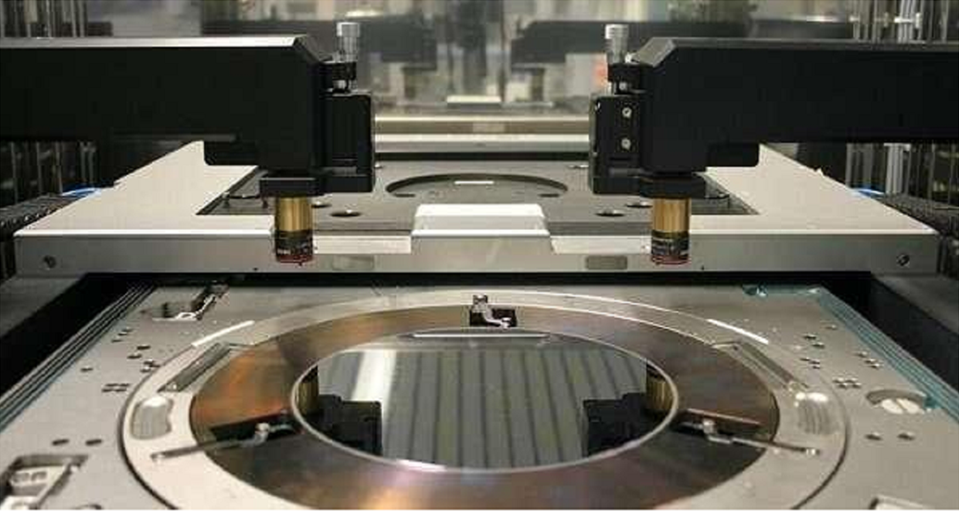
Die attach adhesive curing isn’t just about heat. It’s controlled heat that repeats the adhesive’s cure profile, shift after shift. We anchor the heating on quartz halogen lamps with short-wave output. That short-wave energy punches through thin adhesive layers fast, ramping quickly without dumping extra heat into the substrate. For low thermal mass packages and substrates, that means less thermal lag and less overshoot. Even with thicker bond lines, the short-wave profile gives uniform surface heating that pushes the cure front evenly across the joint. Uniformity is the core spec. We hold wafer-level temperature uniformity at ±0.1°C across the active bond area. That number matters because adhesive gel points and glass transitions are sharp—0.2°C across the bond can shift cure conversion enough to change adhesion strength and voiding behavior. Repeatability is the other spec you can’t negotiate. The system delivers the same temperature profile lot to lot, carrier to carrier, with minimal drift. In production, “close enough” isn’t close enough. You need the same ramp, the same peak, the same hold, every time. Cleanroom compatibility is table stakes. The system is rated for Class 1–100 environments, with materials and seals chosen to keep particle generation at zero. In lithography and bonding areas, one particle on a bond pad is one killed device. We design the lamp module, reflector geometry, and airflow path to avoid shedding and to catch outgassing before it reaches the process zone. Thermal control is closed-loop and fast. A high-resolution sensor feeds the controller in real time, and lamp output is adjusted on the fly to keep the adhesive on the target curve. The controller logs every run, so the cure record is traceable to each unit and each lot. Reliability comes down to uptime. The lamp and power train are rated for long life, and the system is built for 24/7 operation. When a lamp hits end-of-life, it hot-swaps without breaking the cleanroom envelope, so unplanned downtime stays near zero.
Why this works where you run it
The fab is a chain of thermal steps, and die attach curing is one of the places where temperature directly controls mechanical integrity. In wafer drying and cleaning, you strip moisture and contaminants before bonding. If the curing step is inconsistent, the bond line can trap moisture and form voids. With a stable, repeatable cure, you close that loop. The adhesive cures as intended, and encapsulation downstream sees a predictable thermal load. In photoresist processing, soft bake and hard bake are all about solvent removal and polymer crosslinking. The same thermal discipline applies. Our system brings that same precision to die attach curing—ramp rate, peak, hold—repeatable. That consistency cuts adhesive variability, and less variability is a direct hedge on yield. In packaging, die attach curing sits right at the gate before wire bond. Under-cured adhesive makes wire sweep more likely during bonding. Over-cured adhesive can turn brittle and crack under thermal stress. Hold the cure window tight, and you cut rework, cut scrap, and keep the line moving. The payoff is measurable. Tighter adhesive profiles mean fewer bond failures, fewer voids, and fewer electrical failures tied to delamination. Tighter control also trims energy waste. Fast ramp-up with short-wave lamps shortens the cycle without compromising cure quality, and shorter cycles translate into higher throughput without adding heat load to the cleanroom.
The practical details you’ll run into
Even a well-behaved thermal system has real-world constraints. The short-wave lamp gives you speed and uniformity, but it needs disciplined thermal management. Keep the reflector geometry and cooling path clean. Blocked airflow or a dirty reflector scatters energy and creates hot spots. Schedule a preventive maintenance window for lamp inspection and reflector cleaning, aligned with your cleanroom protocols. Compatibility is process-specific. Adhesives vary by chemistry, filler content, and cure sensitivity. The system is configurable across a range of cure profiles, but the initial qualification has to match the adhesive’s thermal behavior and the package stack-up. Bring your adhesive data sheet and your target cure curve to the install. We tune the ramp, peak, and hold to match the material—never the other way around. And integration isn’t optional. The system has to line up with the handler, the bonder, and your MES workflow. We support standard interfaces and traceability logging so the cure record drops cleanly into your line control and quality systems. If your fab treats die attach adhesive curing as a production step, the temperature curve isn’t a detail. It is the process. Hold it precisely, and the line runs with fewer stops, fewer escapes, and a yield curve that stays where you want it.